Why Montessori ?
Montessori approach for the full development of the human being!
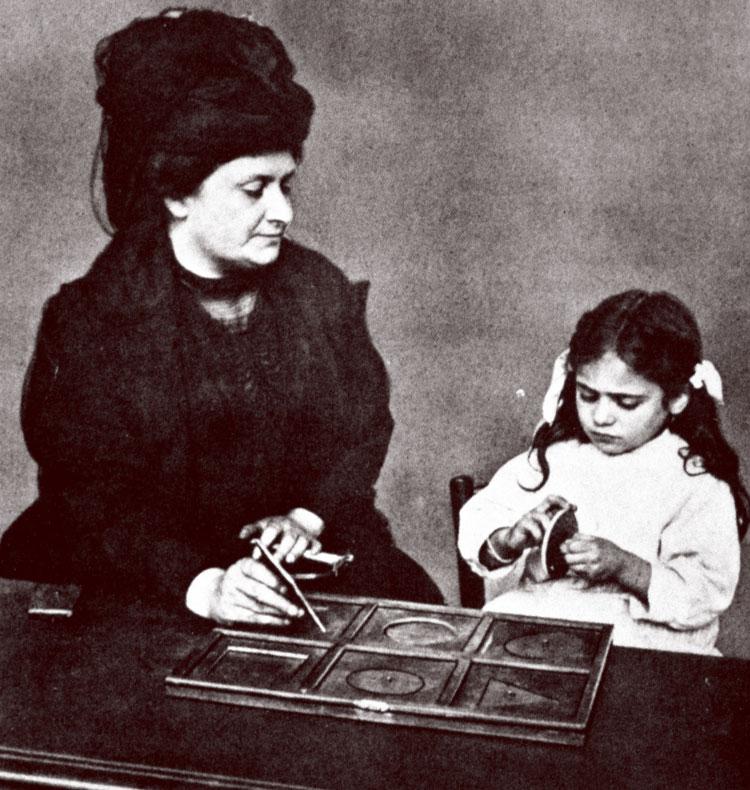
In 1907, Dr. Maria Montessori — a physician and scientist — opened her first classroom in Rome for children living in poverty. What she observed there changed the course of education forever.
She noticed that when children were given the right environment, the right materials, and the freedom to work at their own pace, they didn't need to be pushed or rewarded. They were intrinsically driven. They concentrated for long stretches. They helped each other. They returned to work voluntarily, again and again.
What emerged from those observations became the Montessori Method — a child-centred approach to education rooted not in ideology, but in careful, documented science.
Today, over a century later, the method remains one of the most researched and validated approaches to early childhood education in the world.
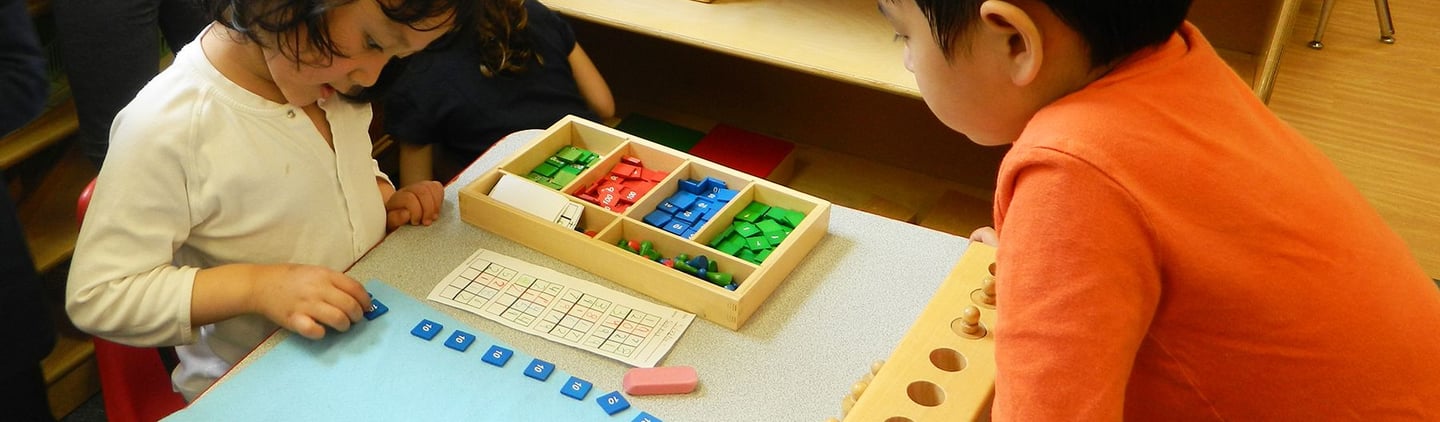
At its core, Montessori emphasises self-directed learning, hands-on exploration, and meaningful collaboration within an environment thoughtfully prepared to support each stage of a child’s development. In a Montessori classroom, children are free to explore at their own pace, guided by an adult who facilitates rather than instructs.
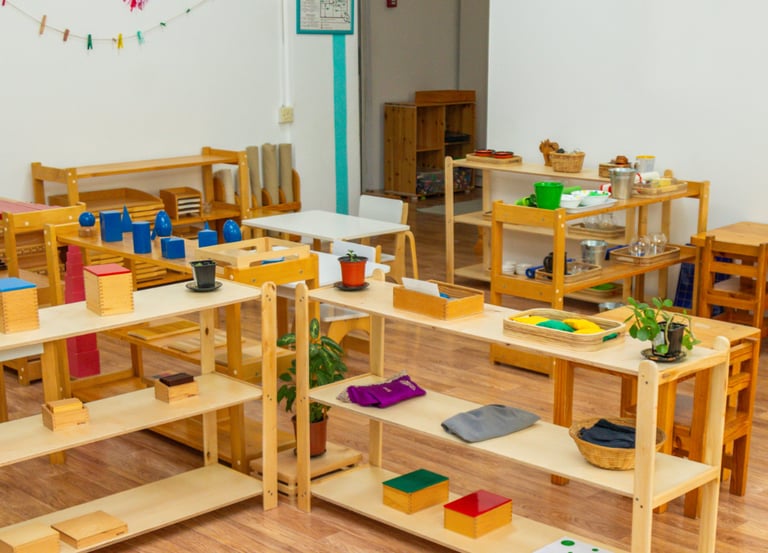
The space is carefully arranged with accessible, purposeful materials that invite children to engage deeply in their work—fostering independence, concentration, problem-solving, and creativity. The early years, especially from birth to six, are a powerful period of sensorial learning.
During this time, children absorb the world through their senses—touch, sight, sound, taste, and smell. every activity is designed to engage these senses, beginning with simple exploration and gradually evolving into more abstract understanding.
Pillars Of the Method
A proven approach that nurtures independence, confidence, and a lifelong love for learning.
Self-Directed Learning
In a Montessori classroom, the child chooses their work. Not randomly — within a carefully curated range of materials matched to their developmental stage — but genuinely. The child decides what to explore, how long to spend on it, and when they are ready to move on.
This is not permissiveness. It is respect. And it builds something no reward chart ever can: intrinsic motivation — the desire to learn for its own sake.
Mixed-Age Groups
The adult in a Montessori classroom is called a guide — and the word is chosen deliberately. Their role is not to instruct from the front of the room, but to observe, prepare, and offer precisely timed interventions that open new doors for the child.
A great Montessori guide is defined as much by what they don't do as by what they do. They resist the urge to help too quickly. They trust the child's struggle. They know the difference between productive difficulty and genuine frustration.
Prepared Environment
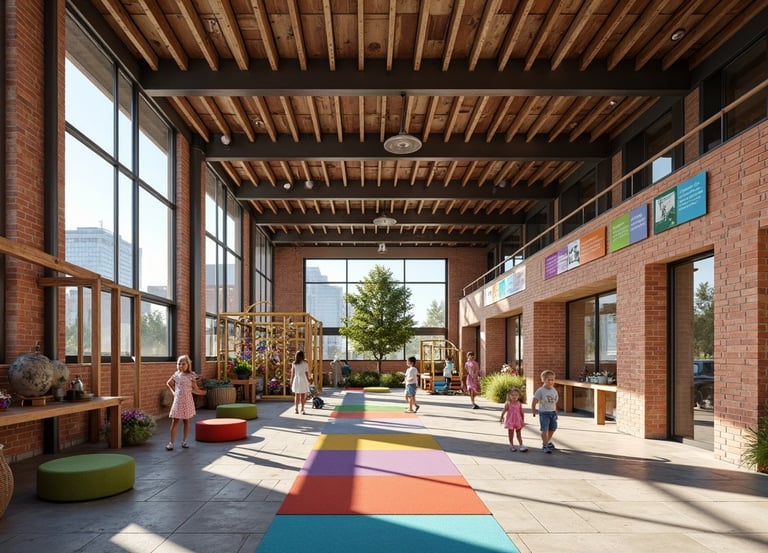
A prepared environment is a thoughtfully designed space where everything is arranged to encourage independence, focus, and exploration including Multi-age classrooms (0-3,3–6 years) that foster leadership and peer-to-peer learning.
The Montessori Guide
Montessori classrooms group children across three-year age spans. The reasons are both social and academic.
Younger children are inspired by what older children can do. Older children deepen their mastery by guiding those who are earlier in the journey. Leadership, empathy, and patience emerge not from lessons about them — but from living them daily in a community of mixed ages.
WHAT RESEARCH SAYS
This Isn't Just Philosophy. The Research Backs It.
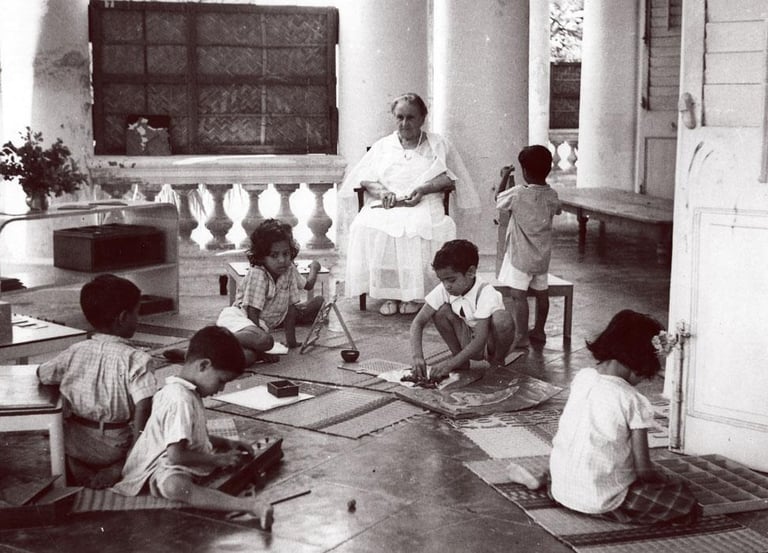
Decades of independent research have examined Montessori outcomes — and the findings are consistent.
Children from authentic Montessori environments consistently demonstrate stronger performance across literacy, numeracy, executive function, and social skills when compared to peers in conventional schooling. They show greater ability to regulate their emotions, sustain attention, and approach problems creatively.
Critically — these advantages are most pronounced in schools where the method is implemented fully and without dilution. Partial Montessori produces partial results. Authentic Montessori produces something measurably different.
This is why purity of method is not a premium add-on at Arkvana. It is the entire point.
"It is not true that I invented what is called the Montessori Method… I have studied the child; I have taken what the child has given me and expressed it" -Dr Maria Montessori
MONTESSORI MYTHS
Questions Parents Often Ask
Is Montessori only for certain types of children?
The Montessori method was originally developed for children living in poverty in Rome — and it worked. It has since been validated across cultures, abilities, and socioeconomic backgrounds. It is not a method for a particular type of child. It is a method that respects the universal nature of how children develop.
How do I know if a school is genuinely Montessori?
Look for AMI or IMTC trained educators, authentic Montessori materials, mixed-age classrooms, and uninterrupted work cycles of at least two to three hours. If a school calls itself Montessori but separates children strictly by age, uses screen-based learning in the early years, or has a teacher-led lesson format, it is not delivering the method. At Arkvana, we welcome this scrutiny. Come and see for yourself.
Is Montessori too unstructured? Will my child be ready for a traditional school later?
Montessori is not unstructured — it is differently structured. Children work within a carefully curated environment with clear expectations and purposeful materials. Research consistently shows Montessori children transition well into conventional schooling, often arriving more independent, focused, and curious than their peers.
Want to see Montessori in action?
The best explanation of Montessori is not words on a page — it is a child working independently in a prepared environment. We invite you to visit Arkvana, observe our classrooms, and experience the method firsthand.